Archived post by paqwak
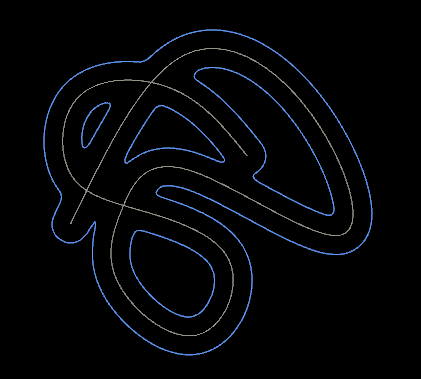
yup, probably very ugly ‘coding’ wise, but … it works :O) (still need to add the break/stop) condition … kinda hypnotic 🙂 (I should rename it “retarded postman” or something 🙂 )
Attachments in this post:
http://fx-td.com/houdiniandchill/wp-content/uploads/discord/20232307/14/23/PseudoPostman3.hiplc
http://fx-td.com/houdiniandchill/wp-content/uploads/discord/20232307/14/23/GIF_7-14-2023_1-24-27_PM.gif
Archived post by swalsch
totally, seems that openIO won’t area-sample pngs
well, multiple calls of colormap it is
totally works with the mandril
for posterity, this is how I solved it with multiple calls of colormap: “`c vector uvw = set(v@P.x+.5,v@P.z+.5,0.0); string texPath = chs(“tex_path”); vector colors[] = {}; for(int i=0;i
Attachments in this post:
http://fx-td.com/houdiniandchill/wp-content/uploads/discord/20230707/12/23/image.png
Archived post by petersanitra
@squidbean yes and yes, and use .tx, works great for me. You can also use {“KARMA_XPU_OPTIX_SPARSE_TEXTURES” : “1”} to force it to sparse
re mipmapping, it picks correct mipmap level from tx. You can check with this map for example, if you don`t have one around already… dgruwier.gumroad.com/l/LJehG
It`s fun map to use, for example checking displacement, comparing engines etc, fun fun 🙂
Archived post by will1059
inside the rig vop:)
this looks crazy, but its actually a lot easier than trying to do everything with skeleton blends and its very quick
Attachments in this post:
http://fx-td.com/houdiniandchill/wp-content/uploads/discord/20234707/07/23/william.rig.1.0.hdalc
http://fx-td.com/houdiniandchill/wp-content/uploads/discord/20234707/07/23/image.png
Archived post by lwwwwwws
this is literally my specialist subject, strap in 😈 there is indeed a lot of eyeballing wih various blurs, convolves, glows, chroma spread filters but there are a few more accurate things you can do: ✺ extract out-of-focus discs from real images and use them as convolution kernels, either in-render or in nuke with ZDefocus/pgBokeh ✺ match distortion and the way it changes with focus by shooting grids, crucial for for wide anamorphics ✺ both zeiss and cooke are slowly getting into the 21st century and providing distortion and vignetting data for their lenses, either online or via the data connection to the camera: cincraft.zeiss.com/us/home, cookeoptics.com/wp-content/uploads/2021/11/Cooke-i-Technology-Part-III-2021.pdf ✺ karma has a physical lens shader and octane has similar controls in its universal camera which at least try to render with aberrations (they are sooooo not based on actual lens designs tho)
✺ there a few tools for properly simulating flares from real lens designs appearing, e.g. dl.acm.org/doi/pdf/10.1145/3329715.3338881, beatreichenbach.github.io/realflare/, www.maxon.net/en/red-giant/vfx/real-lens-flares ✺ there’s another set of flare approaches that consider the whole image rather than single-point light flares, which are less physically-based but look awesome e.g. the video midway down www.fxguide.com/fxfeatured/the-batman-movie-keeping-it-real/ and to some extent the FFT-based bloom in game engines ✺ over the last decade or so there’s been a bunch of research into lens simulation for vfx which feels like it’s almost ready to get used, most obviously lentil.xyz/… I summarised a lot of the relevant papers in the pinned tweet thread on https://twitter.com/dearlensform and i’m perenially trying to make something based on those ideas – the hope is to simulate things that have to be guessed at currently like local contrast effects, astigmatism, pupil occlusion, veiling glare, colour effects beyond just scaling the blue channel a bit… ✺ there’s also TON of research going on right now about simulating lenses for machine vision because obviously the lens has a massive effect on how ML models “see” the world, and some of it might become applicable for vfx as well… i’m way behind with my reading but e.g. ieeexplore.ieee.org/document/9919421, dl.acm.org/doi/10.1145/3197517.3201333, quan-zheng.github.io/publication/NeuroLens-paper.pdf
oh also i’m extremely curious about whether weta have some absolutely sick in-house tools for all this given how exacting both PhysLight and Manuka sound, the fact they they never talk about the obvious connection between the two (the lens) and the fact that they have a solid section of names in the credits labelled “Optics”… <:blobhyperthonk:503450826329817088>
Archived post by lwwwwwws
on mac it’s super easy using instruments.app which comes with xcode… just pick “time profiler”, choose a running process at the top, hit record for a few seconds then fiddle with the viewing options at the bottom ⏱️ actually there’s even a basic version you can get from activity monitor by hitting “sample process” from the three dots menu on linux you can do `perf record -p
for windows i have no clue though, i’d love to know… i’m a clueless baby about windows development, you might have to install full visual studio
Archived post by astv
I don’t know if this is useful or not to you but I wrote a shelf tool a while ago that lets you select multiple images and ocio convert / write them with COPs, I use it fairly often, feel free to steal and share 🙂
Attachments in this post:
http://fx-td.com/houdiniandchill/wp-content/uploads/discord/20233806/22/23/cop_ocio_convert.py
Archived post by Reinhold
@flight404 here’s a couple of ideas
Attachments in this post:
http://fx-td.com/houdiniandchill/wp-content/uploads/discord/20231606/11/23/curve_bevel_rr_v1.hipnc
Archived post by Malmer
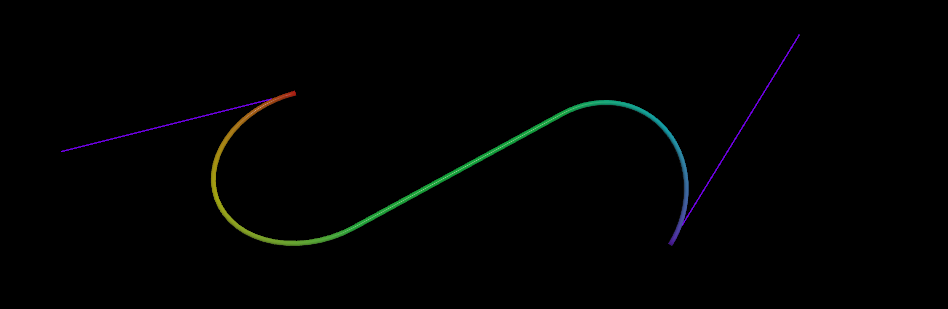
Having fun with my little curveChamfer thing. I made it so that it outputs optional points so that you can make rollers or whatever.
Attachments in this post:
http://fx-td.com/houdiniandchill/wp-content/uploads/discord/20233706/09/23/houdini_op56DFGEe3.gif
http://fx-td.com/houdiniandchill/wp-content/uploads/discord/20233706/09/23/chamferplay.hiplc